The Compounder Model
Building Enduring Industrial Value Through Permanent Ownership
Compounders represent a fundamentally different approach to building and owning businesses. Unlike traditional private equity firms that buy to sell, or strategic buyers who consolidate for synergies, compounders acquire profitable companies with the intent to hold them forever.
What is a Compounder?
The model is simple but powerful: acquire small, profitable businesses—often family-owned—keep them operating independently with their own leadership, and reinvest the cash they generate into acquiring more businesses. Over time, this creates a self-reinforcing flywheel where each acquisition funds the next, compounding returns across decades rather than maximizing them over a typical 5-7 year fund cycle.
| Aspect | Compounder IS | Compounder IS NOT |
|---|---|---|
| Ownership Timeline | Permanent ownership with no planned exit date | A fund with a 5-7 year lifecycle requiring eventual sale |
| Capital Structure | Patient, permanent capital (internally funded or from aligned permanent investors) | LP-driven fund capital demanding IRR targets and distribution timelines |
| Acquisition Strategy | Many small, repeatable acquisitions over time (serial acquirer) | Large, transformative "bet the company" deals |
| Value Creation | Compounding through operational improvement + reinvestment over decades | Maximizing short-term EBITDA for near-term exit multiple |
| Portfolio Management | Decentralized—each business operates independently | Centralized platform with consolidated operations |
| Synergy Approach | Explicitly does NOT rely on synergies for value creation | Built on forced integration and cost synergies |
| Target Businesses | Profitable, cash-generative niche businesses (often family-owned) | Distressed assets, turnarounds, or high-growth unprofitable companies |
| Success Metric | Long-term compounded returns measured in decades | Quarterly EBITDA growth and fund IRR |
The DNA of a Successful Compounder
Leading compounders share several core characteristics that differentiate them from traditional acquirers.
Permanent Capital Structure
True compounders operate without outside fund investors demanding exits on fixed timelines. This permanent capital base means they can focus on long-term value creation rather than engineering short-term returns. There's no pressure to sell in five years, no mandate to hit IRR targets that force premature harvests of value.
Decentralized Operations
Rather than consolidating acquisitions into centralized operations, compounders maintain extreme decentralization. Each acquired business retains its own leadership, brand, customer relationships, and decision-making authority. The holding company stays lean, focused primarily on capital allocation and high-level strategic support.
Small, Repeatable Acquisitions
Instead of making a few large, transformative deals, compounders execute dozens or hundreds of smaller acquisitions over time. This approach reduces risk through diversification, creates more deployment opportunities, and allows the acquisition process itself to become a refined, systematic capability.
No Forced Synergies
The businesses acquired by a compounder may operate in completely different industries. A compounder might own dental equipment distributors, demolition contractors, industrial springs manufacturers, and software companies—all under one umbrella. The value creation doesn't come from combining these businesses but from giving each one the stability and capital to optimize its own niche.
Focus on Cash Generation
Compounders target businesses with proven ability to generate consistent cash flow. These aren't high-growth startups or turnaround situations; they're mature, profitable operations in specialized niches with limited need for additional capital investment. The cash they throw off becomes fuel for the next acquisition.
The Compounder Advantage
Why this model works for shareholders, business owners, employees, and communities.
FOR SHAREHOLDERS
Extraordinary Long-Term Returns
Compounders have demonstrated extraordinary long-term returns by maintaining disciplined capital allocation across market cycles. Companies like Lifco, Constellation Software, and Berkshire Hathaway have compounded shareholder value at rates far exceeding major indexes over multi-decade periods. The magic lies in the asymmetric risk-reward profile through diversification and disciplined acquisition criteria.
FOR BUSINESS OWNERS
Genuine Permanence
For founders and families considering succession, compounders offer something private equity and strategic buyers cannot: genuine permanence. The business you built won't be flipped in five years, won't be renamed and absorbed into a conglomerate, won't see its workforce decimated for "efficiency gains." Your leadership team stays in place. Your customers continue working with the same people they know. Your brand and culture remain intact.
FOR EMPLOYEES & COMMUNITIES
Jobs, Culture, Presence
Decentralized compounders preserve jobs, cultures, and community presence in ways that traditional M&A does not. There's no mandate to consolidate facilities, eliminate redundant positions, or extract short-term profit at the expense of long-term relationships. The businesses acquired by compounders often grow after acquisition because they finally have access to professional systems, recruiting support, and capital.
How Compounders Compare
Understanding the fundamental differences between buyer types.
| Factor | Traditional Private Equity | Strategic Buyer (Roll-Up) | Compounder Model |
|---|---|---|---|
| Hold Period | 3–7 years (fund mandate) | Indefinite, but often 5–10 years before next sale | Truly permanent (generational) |
| Why They Buy | Financial engineering opportunity | Synergy extraction / market consolidation | Long-term cash generation in a niche |
| Post-Acquisition Integration | Platform buildout, centralize functions | Full integration—absorbed into parent company | Stays independent with own P&L and leadership |
| Management Retention | Often replaced with "professional" team | Eliminated due to redundancy after integration | Retained and empowered—decentralization is core |
| Brand & Identity | Often rebranded under platform name | Always rebranded under parent company | Preserved—each business keeps its own brand |
| Employee Impact | Often significant layoffs for "efficiency" | Major redundancy elimination across merged entities | Jobs preserved; culture protected |
| Exit Strategy | Mandatory—sell to next buyer after 5–7 years | Strategic optionality—IPO, sale, or hold | No exit planned—ownership in perpetuity |
| Cultural Continuity | Disrupted by new ownership every cycle | Absorbed into corporate culture | Protected and invested in |
The Nordic Compounder Heritage
The compounder model reached its highest expression in Scandinavia, particularly Sweden, where companies like Lifco, Addtech, Indutrade, Lagercrantz, and others have executed this strategy with remarkable discipline over decades.
Lifco
Perhaps the most successful example, Lifco has compounded EBITA at over 22% annually from 2001 to 2025 through hundreds of acquisitions across dental equipment, demolition, and environmental technology niches.
The company operates with extreme decentralization—business unit leaders have extraordinary autonomy, and the corporate headquarters remains deliberately lean.
Constellation Software
Pioneered the model in vertical market software, systematically acquiring hundreds of small software companies serving specific industries and geographies.
Each operates independently, retaining its own brand, product roadmap, and customer relationships, while benefiting from Constellation's capital and best practices.
These companies prove the model's durability across industries and geographies. The principles—permanent capital, decentralization, disciplined acquisition criteria, focus on cash generation—transcend any single market or sector.
THE VISION
"When I Discovered the Nordic Model, I Realized Someone Had Already Built My Vision"
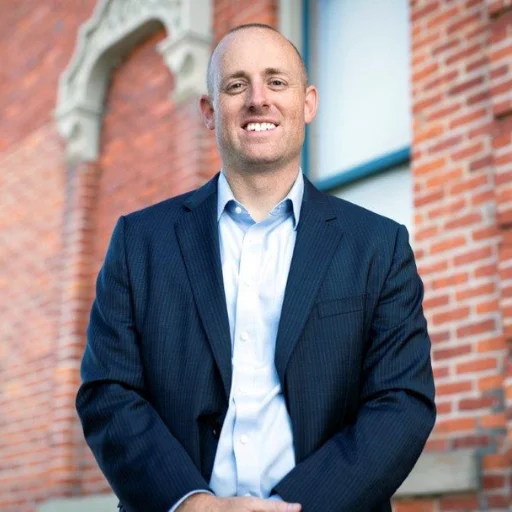
For years, Chris Wallbank held a vision for what business ownership could be—a model built on permanence, decentralization, and respect for the people who built these companies. He believed there had to be a better alternative to the private equity churn and strategic buyer consolidation that dominated American M&A.
Then he learned about the Nordic compounders—companies like Lifco and Constellation Software that had been executing this exact model for decades with extraordinary results. The principles, the structure, the philosophy: it described his vision almost to a T.
That discovery became the foundation for Wallbank Industrial: bringing the proven compounder model to American manufacturing, led by someone who actually understands what it takes to run and scale a family business.
How Wallbank Industrial Brings the Compounder Model to America
We're not outside investors looking in. We're operators who have lived the reality of running a multi-generational manufacturing business.
OPERATOR CREDIBILITY
Built by Someone Who Has Been in Your Shoes
Chris Wallbank didn't learn about manufacturing from case studies or consulting engagements. He grew up on the factory floor of his family's business, started working there in high school, and eventually took over as CEO from his father nearly a decade ago. Under his leadership, PJWS grew from $10M to $50M in revenue—not through acquisition, but through building systems, expanding sales, and navigating the challenges every growing manufacturer faces.
PERMANENT CAPITAL
No Outside Investors, No Exit Mandate
Wallbank Industrial is funded entirely with internal equity. There are no LP investors demanding returns on a timeline, no fund mandates forcing exits, no quarterly earnings pressure. This permanent capital structure means we can genuinely focus on building value over decades, not engineering exits over years. When we say we're buying to hold forever, we mean it—because there's no one forcing us to sell.
DECENTRALIZATION
Your Business Stays Your Business
We don't consolidate, rebrand, or integrate. Each business we acquire continues to operate independently with its own brand, leadership team, customer relationships, and decision-making authority. Your people keep their jobs. Your culture remains intact. Your customers see continuity, not disruption. We provide capital, systems support, and strategic guidance—but you run your business.
MANUFACTURING FOCUS
Great Lakes Industrial Heartland
We're deliberately focused on the Great Lakes region and Midwest manufacturing sector. This isn't a national roll-up strategy or opportunistic capital deployment. We're building something rooted in the industrial communities we know and care about, with a special focus on Southeast Michigan where we live and operate. We believe American manufacturing matters—and we're proving it one business at a time.
The American Opportunity
Despite the proven track record in Europe, the compounder model remains dramatically underutilized in the United States. The industrial landscape here is rich with exactly the kind of businesses compounders target: profitable, family-owned manufacturers with strong niches but uncertain succession plans.
Massive Market Fragmentation
American manufacturing includes thousands of small to mid-sized businesses serving specialized niches—automotive suppliers, industrial components, specialized machinery, precision manufacturers. Many have revenues between $5M and $50M, strong margins, and no clear succession plan.
Baby Boomer Succession Wave
A generational transition is underway. Founders who built businesses in the 1970s, 80s, and 90s are reaching retirement without successors. Their options have historically been limited to private equity (which they distrust), strategic buyers (who will dismantle what they built), or trying to transfer to the next generation (which often doesn't work).
Manufacturing Matters
Unlike purely financial or service businesses, manufacturing creates tangible value, good jobs, and economic resilience. Supporting American industrial capability isn't just good business—it's strategically important for communities and the economy.
Cultural Alignment
American founders value independence, autonomy, and building something enduring. The compounder model resonates with these values far more than traditional PE or strategic M&A.
Red Flags vs. Green Flags in a Buyer
What to look for—and what to avoid—when evaluating potential buyers for your business.
| Red Flag 🚩 (Avoid These Buyers) | Green Flag ✓ (Compounder Qualities) |
|---|---|
| "We have strong synergy opportunities with your business" | "We don't believe in synergies—your business runs independently" |
| "Our fund has a 5–7 year investment horizon" | "We have permanent capital with no planned exit date" |
| "We'll professionalize the management team" | "Your team stays—they know the business better than anyone" |
| "We're building a platform in this industry" | "We're generalists—your niche is your competitive advantage" |
| "We can consolidate operations for efficiency" | "You'll operate autonomously with your own P&L" |
| "You'll benefit from our centralized services" | "We provide optional support—you decide what makes sense" |
| "We need to integrate systems within 180 days" | "We move at your pace on systems—no forced timeline" |
| "Our investors expect X% IRR by year 5" | "We're internally funded—no outside investors to satisfy" |
| "Your brand will be absorbed into our portfolio" | "Your brand is part of your competitive advantage—it stays" |
| "We have 20 other companies in the auction" | "We prefer direct conversations—no bidding wars" |
| "Close in 60 days or we move to the next deal" | "We'll move on your timeline—even if that's years away" |
| Led by investment bankers and consultants | Led by operators who've scaled manufacturing businesses |
What Changes After Acquisition?
A clear comparison of what happens to your business under different buyer types.
| Aspect of Your Business | After Sale to Private Equity | After Sale to Strategic Buyer | After Partnering with Wallbank Industrial |
|---|---|---|---|
| Company Name | Often rebranded under platform/fund name | Always rebranded under parent company | Your name stays—it's part of what we bought |
| Management Team | Frequently replaced with PE "operating partners" | Eliminated as redundant after integration | Stays in place—we bet on the people who built it |
| Decision Authority | Centralized at fund level; seek approval for spending | Centralized at corporate; follows parent playbook | Decentralized—you run your business with autonomy |
| Customer Relationships | May change due to platform priorities | Often disrupted by integration and rebrand | Protected—continuity is a competitive advantage |
| Employee Culture | Disrupted by new ownership culture/mandates | Absorbed into parent company culture | Preserved—your culture is an asset we protect |
| Facility Location | Possible consolidation if part of platform strategy | Likely consolidation to eliminate redundancy | Stays put—no mandate to relocate or merge |
| Brand Identity | Lost—becomes portfolio company of fund | Lost—becomes division of parent company | Intact—local market identity preserved |
| Community Engagement | Often eliminated to reduce "non-essential" spending | Consolidated under corporate foundation/giving | Maintained—local relationships matter to local businesses |
| After You're Gone | Sold again in 5–7 years to highest bidder | Could be divested if strategic priorities shift | Stays in Wallbank family—permanent home |
The Compounder Value Proposition by Stakeholder
| Stakeholder | What Traditional M&A Offers | What Compounders Offer |
|---|---|---|
| Founders/Sellers | Highest price in an auction; business sold again in 5 years; legacy uncertain | Fair price in direct deal; permanent home; legacy protected forever |
| Management Team | Uncertain future; often replaced post-close | Job security; empowerment; continuity of leadership |
| Employees | Layoffs for "synergies"; culture disruption | Job preservation; culture continuity; potential for growth |
| Customers | Service disruption; relationship changes; rebranding | Continuity; same people; same service; same brand |
| Community | Possible facility closure/relocation | Local presence maintained; community engagement continues |
| Investors/Shareholders | 3x-5x cash-on-cash over 5–7 years (maybe) | Sustainable compounded returns over decades (proven) |
Ready to Learn More?
The compounder model isn't just different—it's better for everyone involved except those who profit from churning businesses every few years. For founders seeking succession, employees building careers, communities relying on stable employers, and customers valuing long-term relationships, the compounder model offers something increasingly rare: genuine permanence.
Start a Conversation